Myopia Control: The Things I Tell Parents
A personal guide from Dr Cheryl Lee
If you are reading this because your child's glasses seem to be getting stronger every year, I know exactly how you feel.
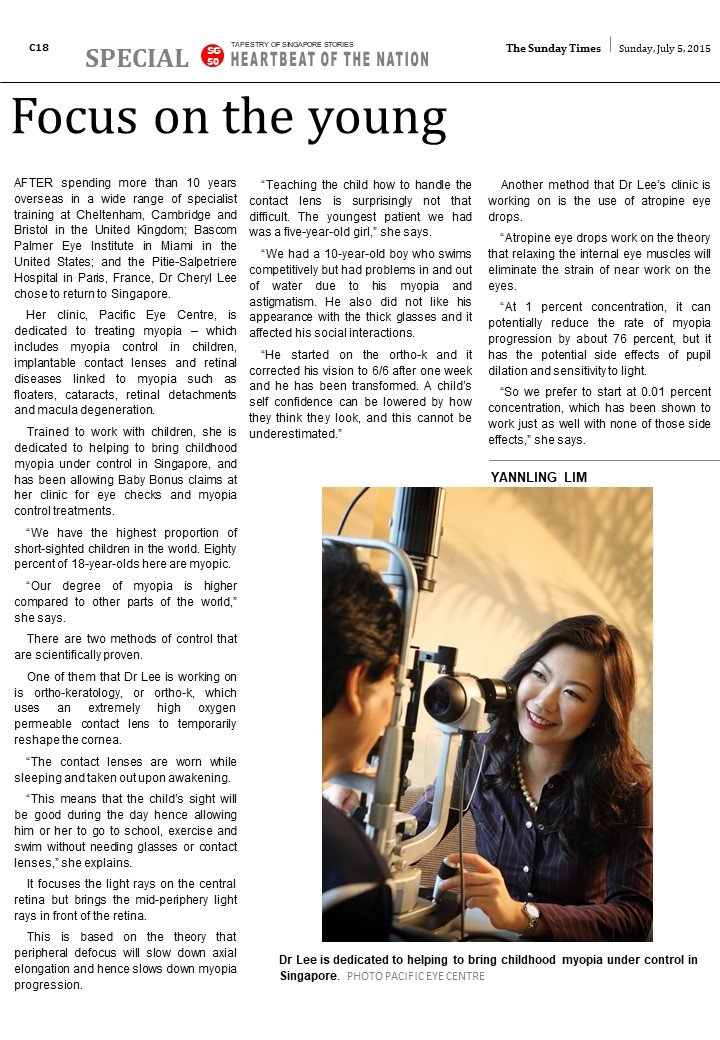
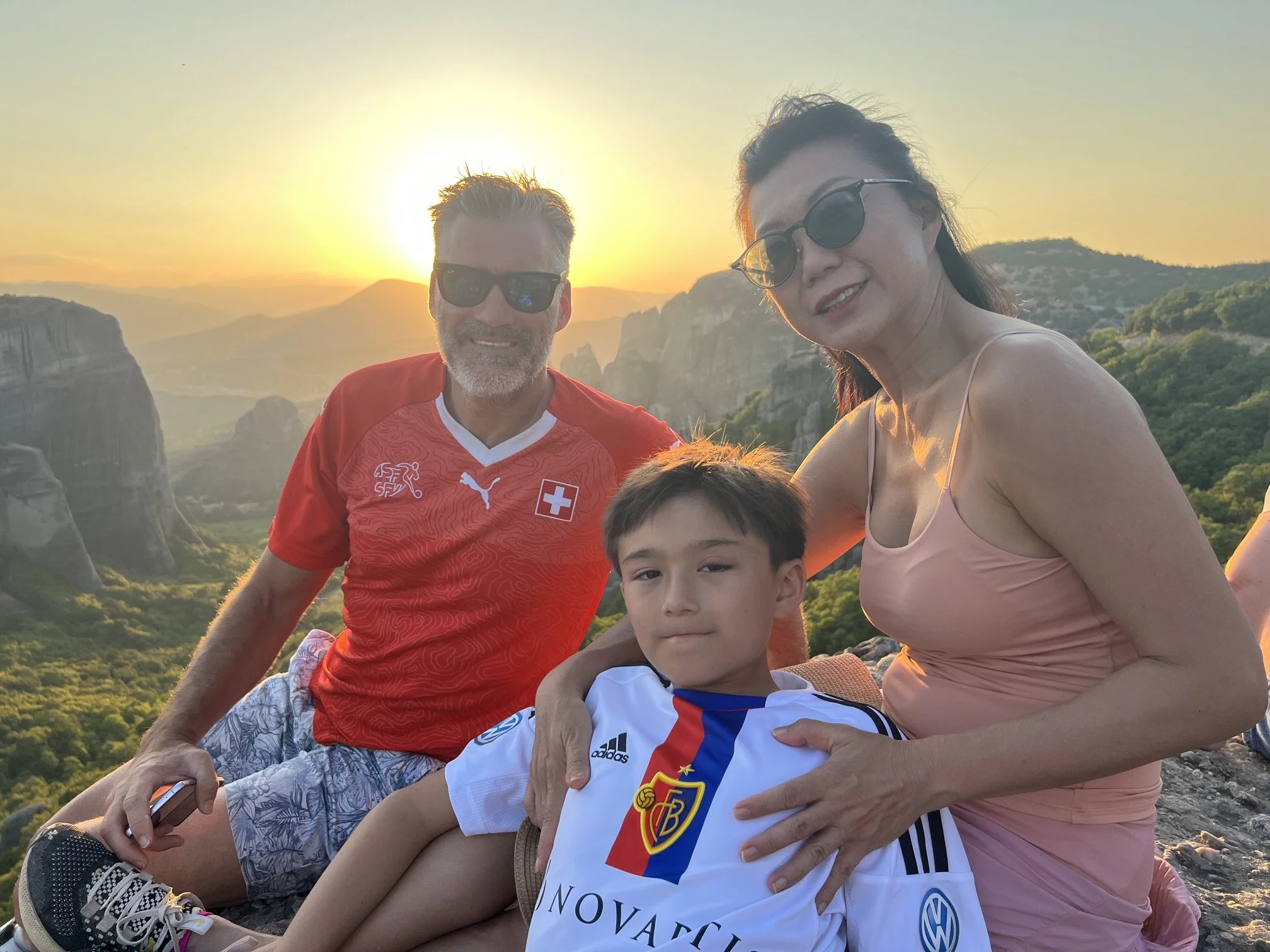
As an ophthalmologist, I have spent many years helping children with myopia. But I am also a mum.
My own son is 12, so the questions parents ask me in my clinic are questions I have had to think about in my own home too.
How much screen time is too much?
Does reading really make myopia worse?
How much time should my child spend outdoors?
Should we consider atropine?
What about Ortho-K or myopia-control contact lenses?
And perhaps the biggest question of all:
What can I actually do every day to give my child's eyes the best possible chance?
There is no single magic answer.
Myopia control works best when we look at the whole child — their prescription, their age, their lifestyle, their habits and how quickly their myopia is changing — and then choose the approach that is right for that particular child.
Here are some of the things I tell parents in my clinic.
1. Outdoor time matters more than most parents realise
If there is one habit I would love every child to develop, it is spending more time outdoors.
Children who spend more time outdoors appear to have a lower risk of developing myopia, and outdoor time is an important part of a sensible myopia-control strategy.
It does not have to be an organised sport.
A walk, cycling, swimming, playing in the park, kicking a ball around or simply being outside and looking into the distance all count.
And I am a great believer in making this realistic.
I would rather your child spend an enjoyable hour outdoors than feel that eye health has become another homework assignment.
2. Don't make screens the enemy
I have an iPhone. My son uses screens for school. Most modern children do. He does not have a phone.
So I don't think telling parents simply to “ban screens” is particularly helpful.
What matters is how screens are used.
I encourage children to:
Avoid holding phones or tablets very close to their face.
Take regular breaks from near work.
Look into the distance regularly.
Avoid spending very long uninterrupted periods doing close-up activities.
Balance screen time with outdoor time and other activities.
And remember that a screen is not the only form of near work.
Reading, drawing, Lego, homework and other close activities also mean that the eyes are spending prolonged periods focusing at a short distance.
The aim is balance, not perfection.
3. Teach your child the “look away” habit
One of the simplest things you can teach your child is to regularly stop looking at something close and look into the distance.
I call this the look-away habit.
It is easy to remember and does not require an app, a gadget or an expensive product.
When your child has been reading, doing homework or using a device for a while, encourage them to pause, look out of the window or across the room and let their eyes look into the distance.
Small habits, repeated consistently, are much more useful than occasional bursts of good behaviour.
4. Don't wait until the glasses are obviously stronger
This is one of the reasons I encourage regular eye examinations for children who are myopic.
A child may not complain that their vision has changed.
They may simply move closer to the television, sit nearer the classroom board, hold a book closer or start squinting.
Sometimes parents notice these changes before the child does.
For a child with progressing myopia, I want to know how quickly the prescription is changing, not simply what the prescription is today.
That distinction is important.
5. Myopia control is not one-size-fits-all
There are several approaches to slowing the progression of myopia, including:
Myopia-control contact lenses such as MiSight
Each has advantages, limitations and practical considerations.
I don't believe in choosing a treatment simply because it is fashionable or because it worked for another child.
Your child's age, prescription, rate of progression, lifestyle, ability to manage treatment and your family's preferences all matter.
The right treatment is the one that is appropriate for your particular child — and that your child can realistically follow.
6. Please don't feel guilty
This is something I tell parents quite often.
When a child's myopia increases, parents can feel that they should have done something differently.
Perhaps they allowed too much screen time.
Perhaps their child didn't play outdoors enough.
Perhaps they should have started myopia control earlier.
Please don't blame yourself.
Myopia is complex. Genetics, visual environment and many other factors play a role.
What matters is not what happened last year.
What matters is what we can do from here.
7. My advice as a doctor — and as a mum
When I see a child with myopia, I am not just looking at a number on a prescription.
I am thinking about the child sitting in front of me.
What do they enjoy?
How much time do they spend outdoors?
What is school like?
How much near work do they do?
Will they actually wear their contact lenses?
Will they remember their eye drops?
What will work for this family six months from now — not just for the first two weeks?
These practical details matter.
Because the most sophisticated myopia-control treatment in the world is not very useful if a child cannot manage it.
Myopia control is a long game
I often tell parents that myopia control is not about finding one perfect treatment and then forgetting about it.
It is about monitoring, adjusting and making sensible decisions as your child grows.
Your child's eyes will change.
Their school demands will change.
Their screen use will change.
Their interests will change.
And our approach may need to change with them.
That is why I prefer to build a relationship with my young patients and their parents rather than simply prescribe something and send them away.
I want you to understand why we are doing something, what we are looking for and what you can do at home
A little personal note
I created this page because these are the conversations I have with parents every day in my clinic.
And because I am a mum myself, I know that sometimes you don't want another long medical lecture.
You want someone to tell you:
“What should I actually do?”
So here is my simple starting point: I have lots of practical tips to help you navigate
More outdoor time.
Sensible screen habits.
Regular breaks from close work.
Regular eye examinations.
And if your child's myopia is progressing, don't simply wait and see. Come and talk to us about the options.
There is no need to be frightened of myopia.
But there is also no reason to ignore it.
My job is to help you understand what is happening, look at the options carefully and work out what makes sense for your child.
And as a mum, I understand why you want to get it right.
— Dr Cheryl Lee Aeschlimann

I download the audiobooks with Mark onto a device. He can only tap on the book he wants to listen to and not play on the ipad. He listens to it through a bluetooth speaker and gazes into the distance. No books or pokemon cards that he can touch around him.
Take a few minutes to learn what
good eye activities are